⚽ Corporate Logos Vanish: The Ultimate Guide to World Cup 2026 Stadium Naming Rights Changes
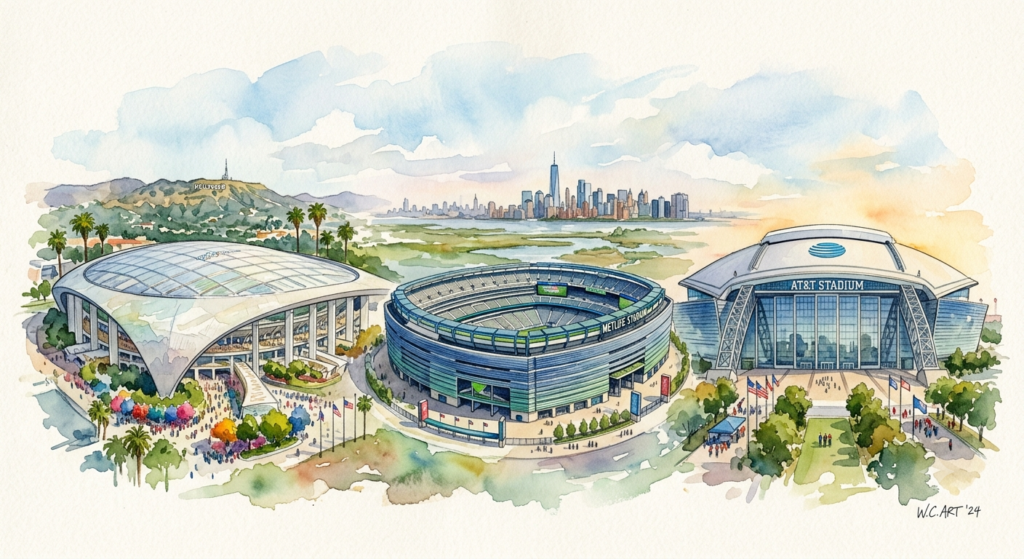
The biggest soccer tournament on earth has officially taken over North America. However, millions of fans tuning into live matches are noticing something very unusual on their screens. Iconic arenas like MetLife Stadium, SoFi Stadium, and AT&T Stadium seem to have completely vanished from the official commentary. To protect lucrative sponsor exclusivity, soccer’s governing body is enforcing strict world cup 2026 stadium naming rights changes across all sixteen match venues. This historic rebranding effort strips away corporate names to create completely neutral ground for the tournament.
🏗️ The Clean Venue Model: Why Names Are Shifting
FIFA relies heavily on its top-tier corporate partners to fund global tournament operations. These exclusive sponsorship deals generate roughly $1.8 billion in revenue during a tournament cycle.
To protect those massive investments, organizers enforce a strict “clean venue” policy at all hosting facilities.
Under these operational guidelines, no stadium can display branding from companies that lack official tournament sponsor status. If an arena carries a corporate name during the regular sports season, it faces an immediate temporary rebrand. This ensures that non-sponsor brands do not receive free international television exposure during the month-long competition.
📍 Shifting Identifiers: The New 2026 Stadium Directory
Every corporate-named facility in the United States, Canada, and Mexico has adopted a geographic or historical placeholder.
The Complete Rebranded Venue List
| Regular Season Name | Official Tournament Name | Location |
| MetLife Stadium | New York New Jersey Stadium | East Rutherford, NJ |
| AT&T Stadium | Dallas Stadium | Arlington, TX |
| SoFi Stadium | Los Angeles Stadium | Inglewood, CA |
| Gillette Stadium | Boston Stadium | Foxborough, MA |
| NRG Stadium | Houston Stadium | Houston, TX |
| Arrowhead Stadium | Kansas City Stadium | Kansas City, MO |
| Hard Rock Stadium | Miami Stadium | Miami Gardens, FL |
| Lincoln Financial Field | Philadelphia Stadium | Philadelphia, PA |
| Levi’s Stadium | San Francisco Bay Area Stadium | Santa Clara, CA |
| Lumen Field | Seattle Stadium | Seattle, WA |
| BMO Field | Toronto Stadium | Toronto, ON |
| Estadio Akron | Estadio Guadalajara | Guadalajara, MX |
| Estadio BBVA | Estadio Monterrey | Monterrey, MX |
🎨 Turning a Cover-Up into a Viral Marketing Win
Forcing stadium owners to hide their permanent corporate signage created an incredible logistical challenge this summer. Workers spent weeks covering massive outdoor logos with specialized fabrics, giant tarps, and neutral panels.
However, clever corporate marketing teams refused to let their brands stay hidden in the shadows.
Instead of complaining about the strict rules, major brands turned the situation into an accidental advertising victory. Levi’s became a viral sensation after stadium staff covered its massive stadium logo with a thin white fabric. The company’s distinctive font remained clearly visible beneath the cloth. Levi’s immediately updated its global social media accounts to match the covered sign, jokingly calling the venue the “beautiful [redacted] stadium.”
Other massive brands quickly copied the trend. Heinz Canada temporarily censored its own famous logo across digital channels to support the rebrand. They even distributed wrapped, “censored” ketchup bottles to local fans outside the gates.
🚪 The Exceptions to the Naming Rule
Not every single arena on the official tournament schedule required a temporary name alteration. Venues that already possess historical, non-corporate identifiers received automatic approval to keep their normal names.
Stadiums Keeping Their Identity
Mexico City’s historic Mexico City Stadium (Estadio Azteca) required no alteration. Its name represents the city’s heritage rather than a modern banking or automotive corporation.
Similarly, Canada’s BC Place Vancouver maintained its everyday moniker. Government-owned properties named after regions or public infrastructure clear the strict advertising filters easily.
📱 Stay Connected with Live Tournament Updates
Navigating these newly renamed venues requires a reliable digital companion on your mobile device. Because shuttle routes, security checkpoints, and ticket gates utilize these neutral names, fans must adapt quickly.
If you want an exceptional digital space to discuss stadium travel tips with other supporters, join the Longfu88 Fan Community. Members share live gate updates and clarify directions for local transportation lines daily. To analyze tournament performance data and follow live group standings natively on your device all summer, check out Longfu88.
❓ Stadium Rebranding Questions FAQ
Will these geographical names become permanent after the tournament ends? No. All sixteen arenas will immediately revert to their lucrative corporate contracts once the final match concludes. Stadium owners rely on those multi-million dollar annual naming fees to fund local venue upgrades.
How do these rules impact local mass transit maps? Cities updated their digital transit apps to display both names simultaneously. Trains heading toward Meadowlands Sports Complex or Penn Station now list both identifiers to prevent passenger confusion.
Do internal stadium concession stands also face branding bans? Yes. Soft drinks, hot dog wrappers, and plastic cups must display official tournament sponsor logos. Staff completely remove or cover non-sponsor beverage fountains before gates open.
🏁 The Final Whistle
The massive world cup 2026 stadium naming rights changes prove the immense financial power of modern sports marketing. While stripping corporate logos off buildings sounds extreme, it protects the economic foundation of the tournament. More importantly, it pushed creative brands to develop brilliant, viral marketing campaigns that fans will remember long after the summer ends.