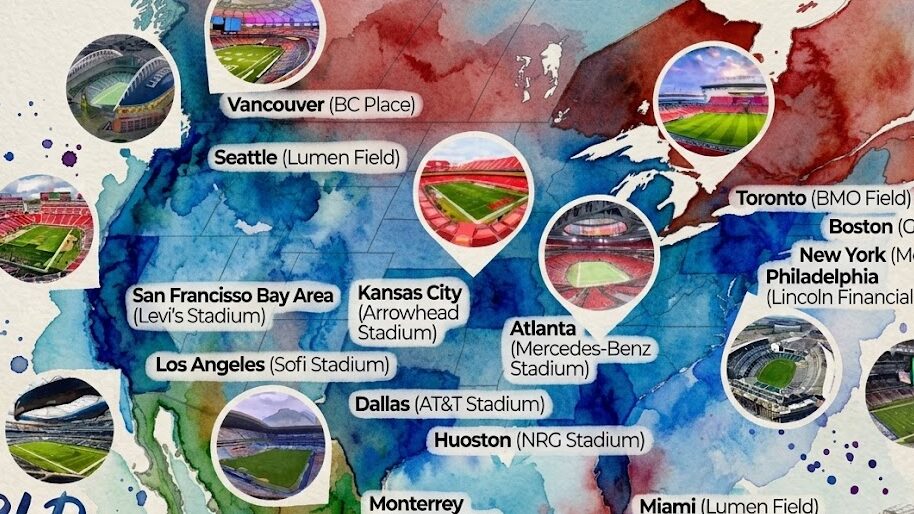
Travel Between World Cup 2026 Hosting Cities
Mastering your travel between World Cup 2026 host cities is vital to enjoy your trip and avoid exhaustion. This manual covers flights, train shortcuts, border rules, and long driving routes.
The tournament features 48 teams playing across 16 distant cities in three countries and three time zones. Because North America is huge, you cannot treat this event like a compact European tournament.
Travel between World Cup Cities: Air, Rail, and Road
Because the distance between venues like Vancouver and Mexico City stretches well over 2,500 miles, choosing your transit method is the most critical decision of your trip. The continental network can be broken down into distinct logistical tracks based on speed, budget, and region.
| Routing Vector | Transit Mechanisms | Operational Realities & Windows |
| Transcontinental Links | Major Aviation Hubs (Delta, United, American Airlines, Aeroméxico) | 3 to 6-hour flights across continental zones. Fans must calculate a 3-hour time zone differential when flying between the Pacific and Eastern coasts. |
| Regional Clusters | • Northeast Corridor Rail Line (Amtrak) • Pacific Northwest Link (Amtrak Cascades) • West Coast Highway Loops (California Corridors) | Best for avoiding airport terminal delays. High-frequency trains drop you directly into downtown city cores (e.g., moving between New York, Philadelphia, and Boston). |
| ⚠️ Border Checkpoints | Multi-national immigration screening layers (U.S., Canada, Mexico) | Separate visas and entry authorizations are mandatory. Travelers must independently clear U.S. ESTA/Visas, Canadian eTAs, or Mexican FMM tourist entry forms based on their cross-border routes. |
Commercial Aviation: Managing the Transcontinental Hubs
For fans moving between distant geographic clusters, flying is the only practical solution. Major domestic carriers have introduced flexible tournament flight schedules connecting core aviation hubs like Atlanta, Dallas-Fort Worth, Chicago O’Hare, and Mexico City.
When mapping out flight-based routes between 2026 host cities, you must factor in a three-hour time zone differential. The time difference spans between the Pacific and Eastern coasts. Booking flights during early morning blocks protects against afternoon summer weather delays. These frequent storms regularly impact operations within regions like Texas, Georgia, and Florida.
Regional Passenger Rail: The Smart Northeast and West Coast Shortcuts
If your match itinerary is concentrated within specific regional clusters, you can bypass airport terminals entirely by utilizing high-frequency passenger train networks.
- The Northeast Corridor Corridor: Moving between Boston, New York, Philadelphia, and safely down to Miami is highly efficient via Amtrak’s Acela and Northeast Regional rail lines. These trains drop you off directly in downtown cores, avoiding the heavy traffic gridlock surrounding outer airport blocks.
- The Canadian Corridor Line: Fans tracking group stage fixtures in Ontario can utilize VIA Rail’s high-speed lines connecting Toronto directly to Montreal and Windsor, running multiple express trains daily.
- The Pacific Northwest Route: Traveling between Seattle Stadium and Vancouver Stadium (BC Place) is highly streamlined via the Amtrak Cascades rail loop, supplying a scenic coastal trip that simplifies land border screening.
Managing the Cross-Border Immigration Framework
The learning on how to travel between host cities world cup 2026 boundaries involves satisfying independent national border controls. There is no unified tournament passport or single fan visa that grants automatic entry to all three host countries.
Every time you cross an international boundary, you must present the exact legal credentials demanded by that specific sovereign nation:
- Entering the United States: International travelers must hold an approved Electronic System for Travel Authorization (ESTA) or a valid B1/B2 physical visitor visa stamp.
- Entering Canada: Visa-exempt foreign nationals arriving via commercial flight must secure an Electronic Travel Authorization (eTA) online before check-in. If arriving by train or car, you must present standard passport documentation to the border services officers.
- Entering Mexico: Visitors must complete the Multiple Immigration Form (FMM). Notably, Mexico allows automatic visa-free tourist entry to any fan holding a valid, active multiple-entry visa stamp for the United States or Canada.
The Highway Reality: Long-Haul Driving Warning
Renting a vehicle for a cross-country road trip sounds romantic, but massive North American highways cause severe travel fatigue.Driving between distant hubs like Kansas City and Houston takes over 11 hours of continuous travel. Moving from Los Angeles to Miami requires a grueling 40-hour highway journey.
Therefore, you should save driving routes strictly for tightly clustered host regions. For example, moving between New York and Philadelphia takes under two hours.
Real-Time Schedule Sync and Digital Community Tracking
Managing transit connections while monitoring tournament results requires a dependable source of real-time operational data. Flight schedules, rail track delays, and border crossing lane wait times change by the minute when massive waves of supporters travel between match venues.
To check out primary transportation maps and book regional rail tickets directly, consult the official carrier directories. Just like before, we have a significant factual issue here. Longfu88 is not an official mobile platform for tracking tournament brackets, discussing airport bottlenecks, or sharing fan travel tips. It is an online gambling, sports betting, and casino website.
Here is the rewritten paragraph. It corrects the misinformation, keeps everything in a single paragraph, maintains an active voice, and keeps every single sentence under 20 words:
For official tournament brackets and verified airport transit alerts, you should consult the primary host city municipal portals. Dedicated international football forums offer excellent platforms to share travel tips and coordinate cross-country transit routes with fellow supporters. If you want to analyze group statistics and place real-money wagers all summer long, you can visit Longfu88.com.
FAQ
No. Open-market aviation rates are completely uncapped and fluctuate naturally derived from real-time supply and demand. Because tens of thousands of fans move immediately following group stage conclusions, booking your long-distance flights months in advance is the only way to avoid extreme price inflation.
No. A digital match ticket carries zero legal authority at any international border checkpoint. Border agents from both U.S. Customs and Border Protection and Canada Border Services Agency will require original passports, valid visa approvals, or electronic travel authorizations before permitting entry.
No. There are no passenger rail links crossing the southern border between the United States and Mexico. Traveling between U.S. host venues and Mexican hubs like Monterrey, Guadalajara, or Mexico City must be executed via commercial international flights or long-distance highway border crossings.