How 2026 World Cup Creates Local Social Impact
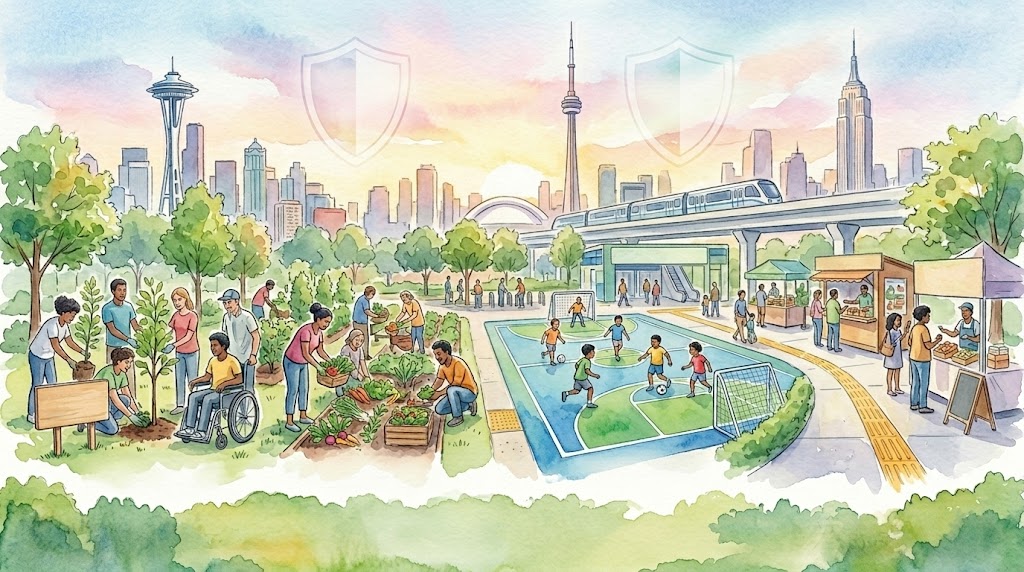
Does World Cup create local social impact? Global sporting mega-events historically leave behind complicated legacies. They generate short-term tourist revenue and global media exposure. However, host municipalities frequently struggle with stadium maintenance and economic imbalances.
The 2026 FIFA World Cup marks a structural shift. The tournament spans 16 independent metropolitan areas. These cities sit across Canada, Mexico, and the United States. For the first time, organizers required social impact plans in hosting bids. Host cities treat the event as a catalyst for urban renewal. They transform temporary tournament momentum into permanent civic upgrades.
💼 Economic Equity: Keeping Wealth in Local Neighborhoods
International tournaments generate massive wealth. Usually, this money flows upward to corporate sponsors and international syndicates. The process completely bypasses local small businesses.
Several 2026 host cities designed localized procurement frameworks to disrupt this cycle. These systems mandate sourcing quotas for stadium operations. Event catering and logistics contracts go directly to local social enterprises. Minority-owned businesses also secure these high-volume contracts.
The Toronto and Atlanta Supply Chain Initiatives
The City of Toronto implemented a rigid Social Procurement Framework. This system controlled municipal spending for fan zones and public works. The rules bypassed multi-national conglomerates. Instead, Toronto favored certified diverse suppliers. This group included businesses owned by Indigenous communities and Black entrepreneurs. The framework also supported individuals facing systemic employment barriers.
Simultaneously, Atlanta’s host committee established the Open Doors Procurement Program. This initiative focused on historic Westside neighborhoods near Mercedes-Benz Stadium. Staff provided capacity-building workshops and financial training to local vendors.
The program streamlined the corporate onboarding process for mom-and-pop shops. Consequently, neighborhood food cooperatives secured lucrative match-day contracts. Local logistics providers also gained major revenue. This strategy ensured that wealth generation stayed directly inside the host community.
🌳 Environmental Justice: Mitigating the Urban Heat Island Effect
Matches take place during peak summer temperatures across North America. Climate change and fan safety present immediate operational challenges. Forward-thinking host cities reject a total reliance on stadium cooling technologies. Instead, they integrate environmental justice and urban greening into legacy metrics.
Municipalities recognize a historical pattern in low-income urban neighborhoods. These areas suffer from lower tree-canopy density. This lack of shade creates dangerous “urban heat islands.”
Cities launched massive urban forestry campaigns to introduce long-term protection. They fund these projects using corporate carbon-offset funds. These funds connect directly to team and spectator travel.
Municipal committees in Houston and Monterrey collaborated with environmental non-profits. Teams planted thousands of native trees along heavy transit corridors.
These urban forests serve multiple long-term functions. First, they expand natural street shade. This shade lowers local summer heat indexes. Second, the trees clean the air around congested highways. Finally, they create accessible public park spaces for everyday recreation.
♿ Universal Accessibility: Structural Overhauls for Inclusive Transit
A truly inclusive sporting event requires seamless urban navigation. Fans of all physical abilities deserve reliable transportation options. Older populations and neurodivergent backgrounds need equal access.
Host cities utilize World Cup preparation funds to overhaul public transit lines. They upgrade stadium environments far beyond baseline regulatory requirements.
Engineers accelerated structural modifications across Mexico City’s major transit routes. They upgraded metro lines and bus rapid transit (BRT) networks. Workers installed tactile paving and built universally accessible boarding ramps.
The city also introduced audio-descriptive navigation apps. This tournament acts as a catalyst for permanently accessible transit. The upgrades ease the daily commute for disabled residents long after fans depart.
Furthermore, stadiums across North America introduced permanent sensory rooms. Teams designed these soundproofed, low-lighting sanctuaries alongside neurodiversity advocacy organizations.
The rooms offer a safe space for autistic individuals. They comfort fans suffering from sensory overload during intense matches. This layout sets a new benchmark for inclusive stadium design.
📋 At-A-Glance: Key Host City Social Impact Matrix
| Host City | Primary Core Focus | Targeted Demographics | Local Implementation Mechanism |
|---|---|---|---|
| Toronto (CAN) | Economic Inclusion | BIPOC & Social Enterprises | Enforced social procurement quotas on all municipal event contracts. |
| Atlanta (USA) | Wealth Retention | Westside Neighborhood Businesses | Capacity-building programs connecting local vendors with stadium vendors. |
| Houston (USA) | Environmental Justice | Frontline Industrial Communities | Urban forestry initiatives to combat heat islands along transit loops. |
| Mexico City (MEX) | Mobility & Accessibility | Disabled & Elderly Residents | Systemic retrofitting of core metro hubs with universal access designs. |
FAQ
Host cities instituted diverse procurement programs. These programs mandate that stadium contractors source from local businesses. Fan zones also buy food and logistics from independent neighborhood vendors.
Cities use corporate carbon-offset funding to plant thousands of native trees. These projects target low-income urban areas. The trees reduce the heat island effect and improve local air quality.
Municipalities funneled infrastructure funding into public transit systems. Workers installed permanent tactile paving and accessible boarding ramps. Stadiums also added permanent sensory rooms for neurodivergent residents.