The Complete Toronto Stadium World Cup 2026 Map and Transit Manual
Driving, walking, or taking rail transit around Exhibition Place is different from the typical experience at Major League Soccer or Canadian Football League events. The park is under strict international security. An accurate toronto stadium world cup 2026 map is essential to navigate roadblocks, security perimeters, and turnstiles. This manual explains stadium changes, transportation lines, and seating orientations.
Global football has arrived on the shores of Lake Ontario. For commercial rules, BMO Field is now called “Toronto Stadium” during the tournament. The venue will host six important matches, already featuring Ghana’s tough 1-0 win over Panama. As international fans come to Ontario, knowing the stadium’s layout is the best way to avoid confusion on match day.
Deciphering the Toronto Stadium World Cup 2026 Map Boundaries
The physical blueprint of Exhibition Place has been heavily modified to accommodate international sporting requirements. To get oriented correctly before you step off the train or out of a vehicle, review how the outer rings align with your digital entrance pass.
The Multi-Ring Security Cordon
On the official toronto stadium world cup 2026 map, the first major change is clear: an extensive outer fence. The complex uses a multi-tiered screening grid. Ticket checks and biometric bag scans occur hundreds of yards from the actual doors. This perimeter closes usual drop-off spots near Princes’ Boulevard to fans. Prepare for a 10-15 minute walk from the gates to your concourse turnstiles.
The Expansion Stand Blueprints
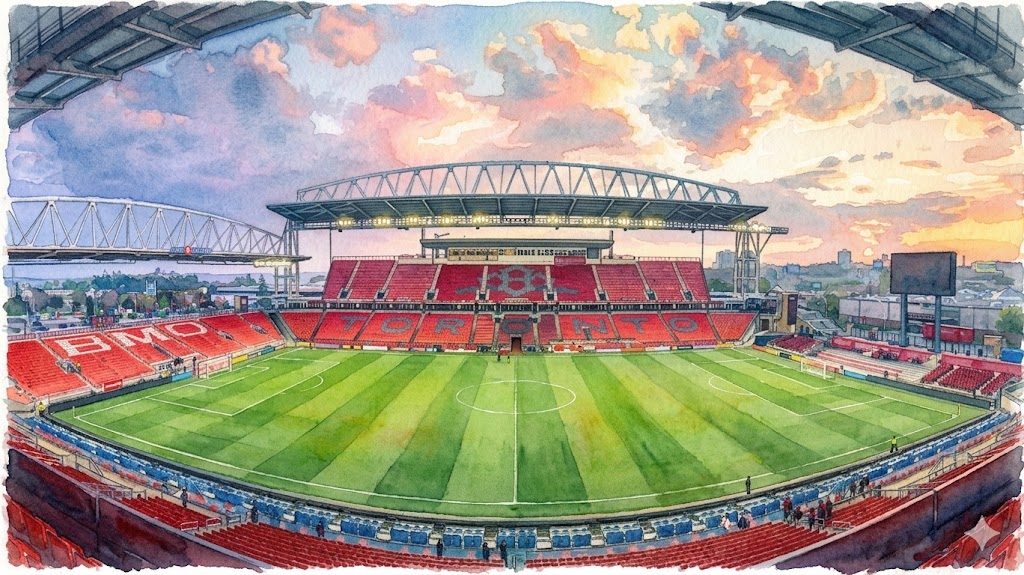
Next, let’s review stadium seating. To accommodate international crowds, the arena’s capacity has increased to 45,736 seats. Temporary grandstands have been added above the south and north ends, significantly altering the traditional seating chart. When consulting your toronto stadium world cup 2026 map, be sure to differentiate between the permanent lower 100-level seats and these new upper decks, each with its own entry stairwells on the east and west plazas.
Seating Categories, Layout Tiers, and Block Locations
Moving past security, your next focus is seating. After clearing the roadblocks, your digital ticket will guide you into one of the stadium’s zones. The venue’s interior footprint divides into three primary configurations:
- The East Stand (Maple Leaf Deck): Highly prized for its sweeping view of the pitch, this side is easily recognized by its massive red seats that form a giant maple leaf. It features streamlined access to standard concession rows and central beverage stations.
- West Stand (Main Grandstand): This side has most corporate boxes and media. Permanent lower 100 and 200 level seats are here. It sits behind the team benches and offers good views of the action.
- North & South End Zones: These areas have the additional tournament seating. They are higher up but right behind the goals, giving fans good views of scoring chances.
The Transit Blueprint: Ditching the Car Entirely
Do not drive near Exhibition Place on game days. Parking within 3 km is for staff and teams only. The best way to reach your seat is by Toronto’s public transit.
The GO Transit Rail Shortcut
The absolute fastest way to reach the stadium is by taking the GO Transit Lakeshore West rail line. Trains drop passengers off directly at the Exhibition GO Station, which sits right along the northern edge of the park. From there, fans can follow the clear path indicated on the toronto stadium world cup 2026 map signage to cross the pedestrian bridges and walk straight into the northern ticket checking bays within five minutes.
The TTC Streetcar Network
If you are coming from downtown, use Toronto’s streetcar system. Three main lines go to the Exhibition Loop:
- 509 Harbourfront Line: Picks up directly from Union Station, offering a seamless link for regional rail travelers.
- 511 Bathurst Line: Connects from the northern subway grid down to the lakeshore.
- 29 Dufferin Express Bus: Services fans arriving from the western neighborhoods.
Live Match Tracking and Community Insights
With games in different time zones, transit updates and gate news can change fast. Whether you travel on the Lakeshore West train or watch from home, stay updated for the latest information.
Head over to the Toronto Match Central portal to monitor direct match calendars, gate delays, and tournament operations. For real-time fan reactions, starting lineups, and quick post-game tactical cards, the Longfu88 community hub serves as an excellent digital companion for your smartphone. To review international group statistics and track adjacent match results natively, keep an eye on Longfu88.com throughout the summer.
FAQ
- Is there a designated lot on the toronto stadium world cup 2026 map for rideshare vehicles?
No. Rideshare vehicles like Uber and Lyft cannot enter Exhibition Place on match days. The official drop-off and pick-up spots are outside the perimeter in Liberty Village, about a 15-minute walk to the ticket checkpoints.
- Can I bring a standard backpack into the stadium rows?
Bring only a clear bag within 12” x 6” x 12”. No storage is available at gates for oversized items, so plan to travel light to avoid issues at entry.
- How early should I arrive based on the transit maps?
Gates open 3 hours before kickoff. Arrive at transit hubs at least 2.5 hours before game time to allow for security and avoid long lines.